
Tick species identification
Gulf Coast tick
What to look for
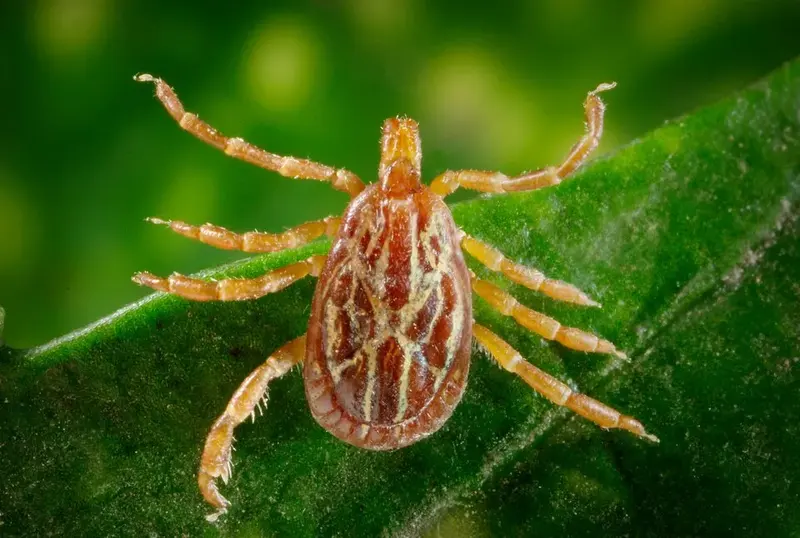
Long mouthparts and ornate pale markings; adults are often found on larger animals and people.
Gulf coast tick photo
Compare more than color alone. Sex, life stage, feeding, angle, and lighting can change what the markings look like.
Known disease associations
- — Rickettsia parkeri rickettsiosis
Finding this species does not mean the tick carried a pathogen or that transmission occurred.
Photos need context
Feeding, life stage, image angle, and damage can change how a tick looks. A useful identification weighs several visible traits together and states uncertainty when the photo does not show enough detail.
References: CDC tick information.