Tick identification guide
Deer Tick vs. Dog Tick: How to Tell Them Apart
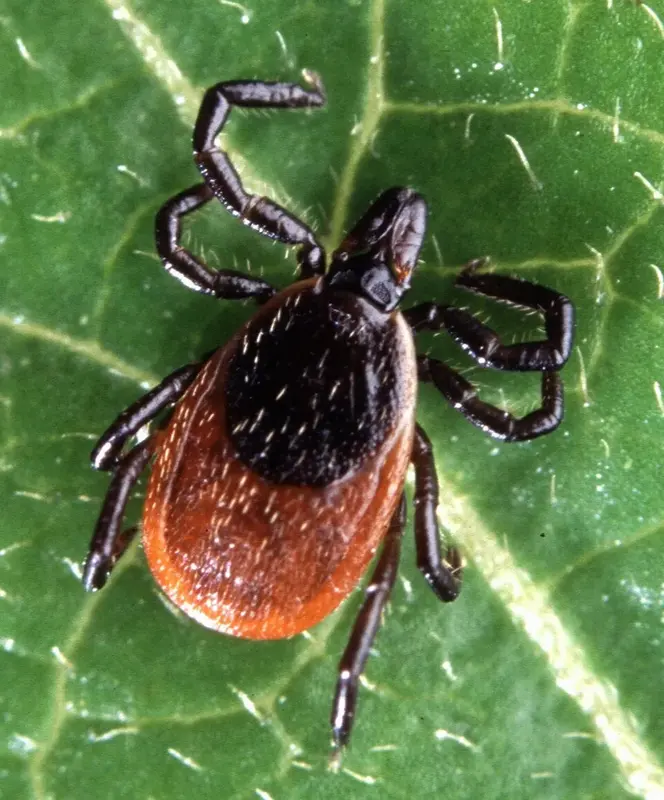
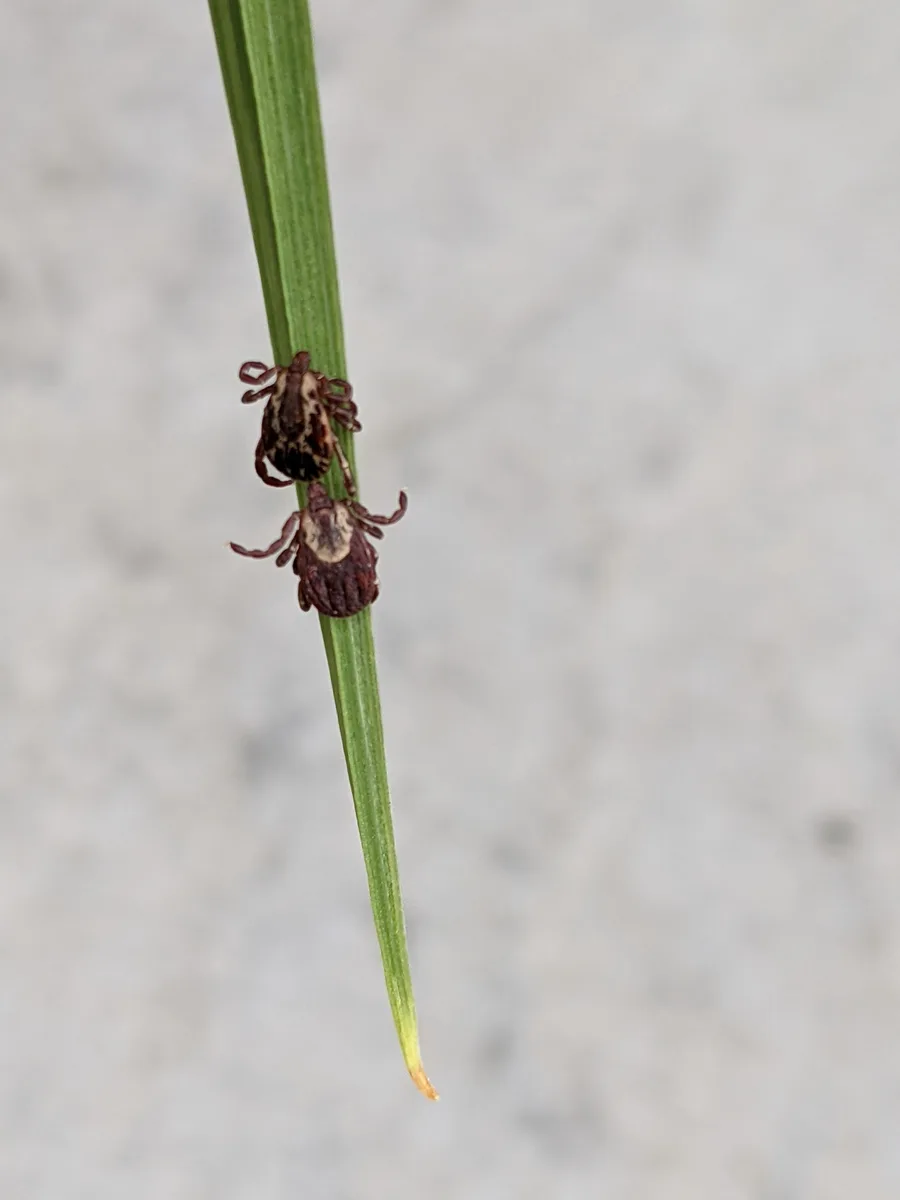
Check the back just behind the head: American dog ticks (often called wood ticks) have cream or white markings there, while deer ticks have none, plus nearly black legs and a smaller body.
Updated November 1, 2026 · Sources: CDC, LSU AgCenter, Pennsylvania DEP, URI TickEncounter
Quick answer
- Look just behind the head. An adult dog tick has cream or white markings there. An adult deer tick has none.
- Check the legs and body color. Deer ticks have nearly black legs. Adult females have a black shield over an orange-red body; males are dark brown all over.
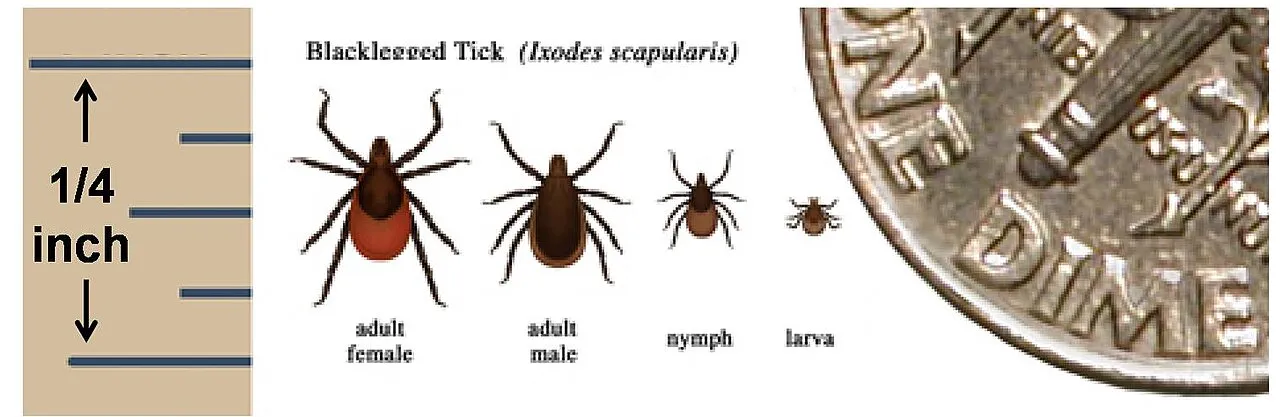
- Compare size. Unfed adult deer ticks are about 2–4 mm long. American dog ticks are about 4 mm. Deer tick nymphs are about 1 mm, the size of a poppy seed.
- Only the deer tick spreads Lyme disease. The CDC says American dog ticks are not able to transmit Lyme disease bacteria. They can spread Rocky Mountain spotted fever and tularemia.
Deer tick vs. dog tick pictures
Comparison chart
| Trait | Deer tick (blacklegged) | American dog tick (wood tick) |
|---|---|---|
| Scientific name | Ixodes scapularis | Dermacentor variabilis |
| Unfed adult size | About 2–4 mm; females larger than males | About 4 mm |
| Markings | No white markings. Female: black shield over an orange-red body. Male: dark brown all over. | Cream or white pattern. Female: on the shield behind the head only. Male: across the whole back. |
| Legs | Nearly black | Brown |
| Engorged female | Up to about 12 mm, dark gray | Up to about 15 mm, with the pale-patterned shield still visible near the head |
| Nymphs | About 1 mm (poppy seed). Bite people and pets. | Poppy-seed size, but feed mainly on mice and other small rodents. Adults are the stage people usually find. |
| When bites peak | Spring, summer, and fall. Adults stay active October–May whenever daytime temperatures are above freezing. | Spring and summer |
| U.S. range | Widely distributed across the eastern United States | East of the Rocky Mountains, plus limited areas in the West |
| Lyme disease | Yes. Spreads Lyme disease in the northeastern, mid-Atlantic, and north-central United States. | No. Not able to transmit Lyme disease bacteria. Can spread Rocky Mountain spotted fever and tularemia. |
Sizes are approximate and vary between specimens. Compiled from the CDC, LSU AgCenter, Pennsylvania DEP, and URI TickEncounter sources listed below.
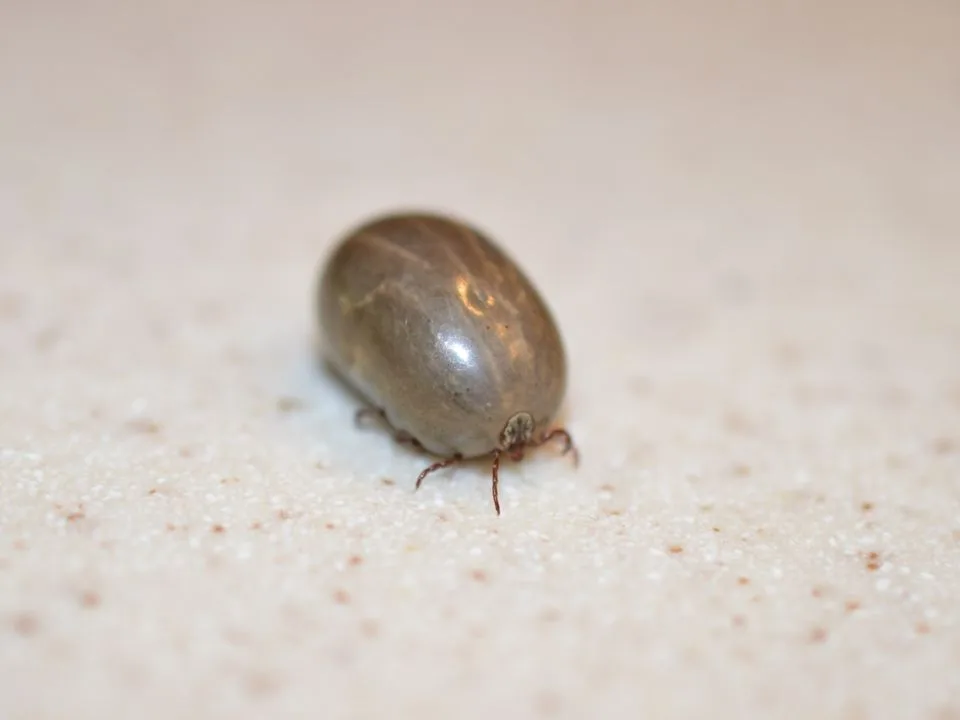
Engorged deer tick vs. engorged dog tick
Feeding stretches a female's body into a smooth gray or gray-brown oval and hides most of the usual color differences. Look at the small hard shield right behind the head, which does not stretch:
- ◆Deer tick: the shield stays plain and dark, and the legs are still nearly black. Engorged females reach about 12 mm.
- ◆Dog tick: the shield keeps its pale, mottled pattern. Engorged females can reach about 15 mm.
An engorged tick has fed, but its size alone cannot tell you exactly how long it was attached or whether it carried a pathogen.
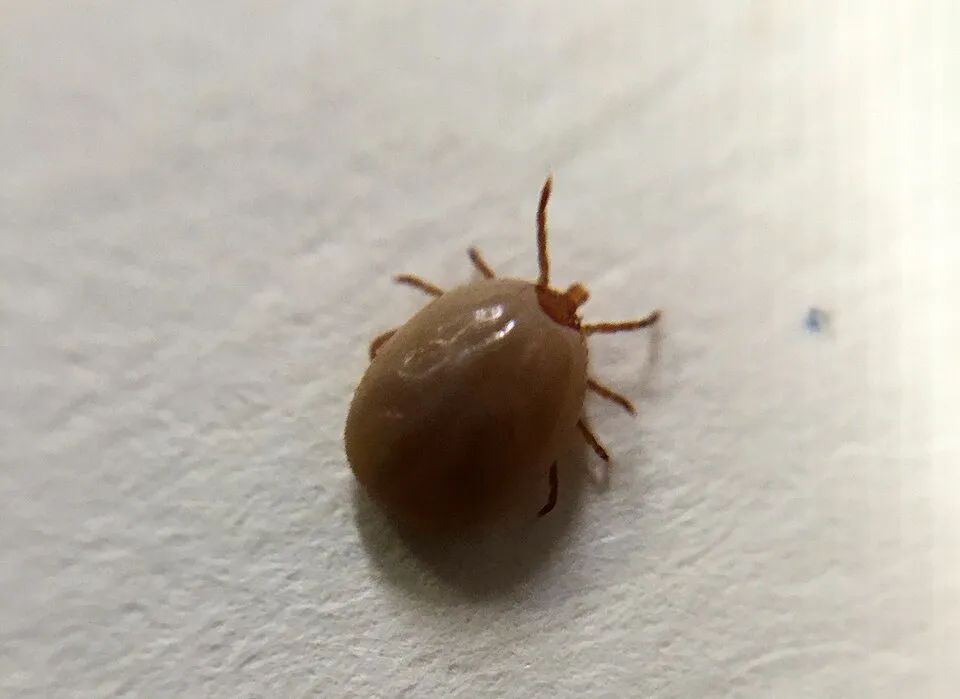
Deer tick vs. dog tick size
Size helps most with nymphs. A deer tick nymph is about 1 mm long and easy to mistake for a speck of dirt. American dog tick larvae and nymphs mainly feed on small rodents, so a tick that size on a person is less likely to be a dog tick.
Is a wood tick a deer tick?
No. "Wood tick" is a common name for the American dog tick. In the Rocky Mountain states it can also mean the Rocky Mountain wood tick, a close relative with similar pale markings. When people say "regular tick," they usually mean one of these. The CDC says neither wood tick can transmit Lyme disease bacteria.
Found a tick in fall or winter?
Season is a clue, not proof. Adult deer ticks stay active from October through May whenever daytime temperatures are above freezing, while American dog tick bites peak in spring and summer. A tick found on a mild November day is more often an adult deer tick, but check the markings before deciding.
Other ticks that look similar
- ◆Lone star tick: adult females have one white dot in the middle of the back.
- ◆Brown dog tick: plain reddish-brown with no pale markings, often found indoors where dogs live.
- ◆Western blacklegged tick: looks almost the same as the deer tick and replaces it along the Pacific Coast.
Compare all common U.S. species on the tick identification chart.
If the tick was attached
Remove it promptly with fine-tipped tweezers, clean the area, and note the date and where it was found. Follow what to do after a tick bite, or the tick bite steps for dogs if you found it on a pet. Contact a healthcare professional if you develop a fever, rash, or other symptoms.
One photo · one payment
Want help identifying your tick?
Upload a clear photo for a private $4.99 report. Analysis starts after payment. No account or subscription is required. Tips for a clear tick photo.
Upload my tick photo — $4.99