Tick species identification
American dog tick
What to look for
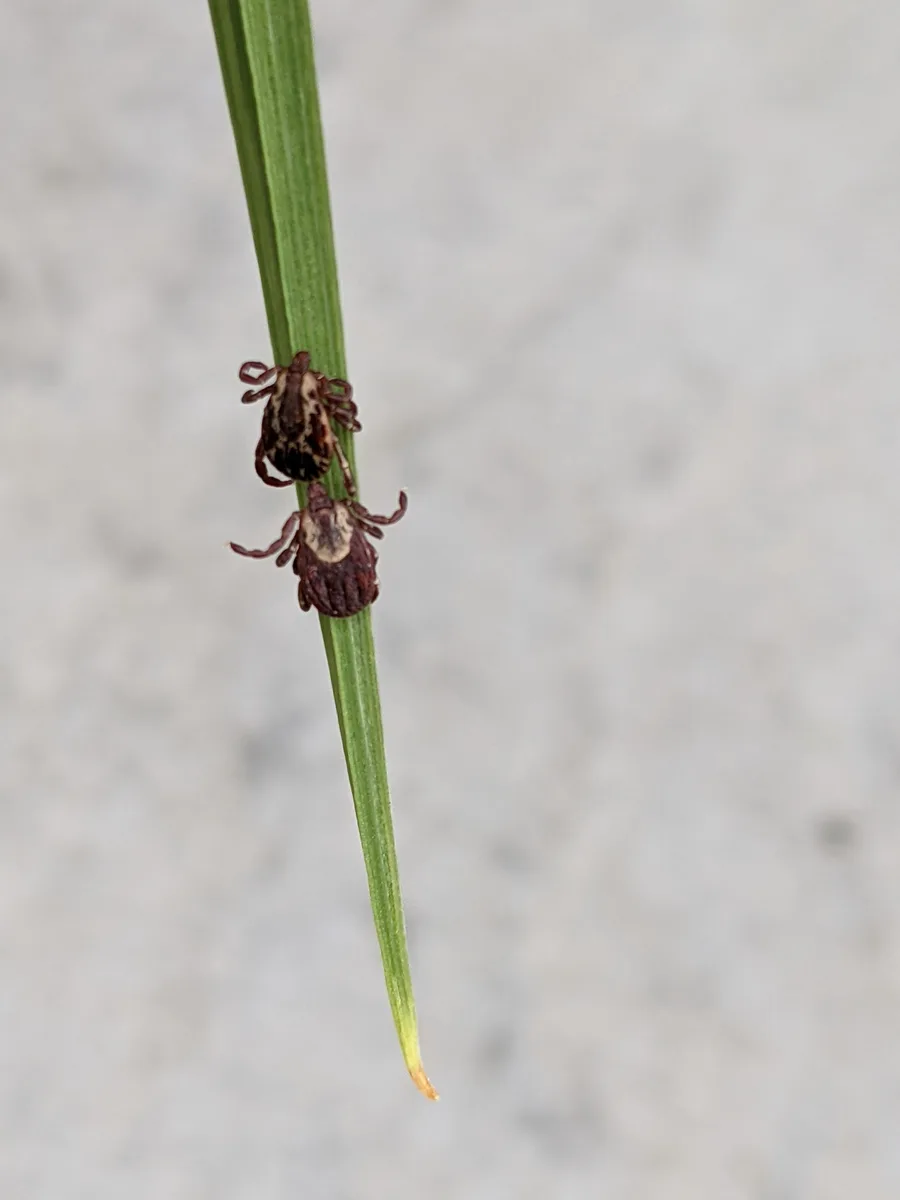
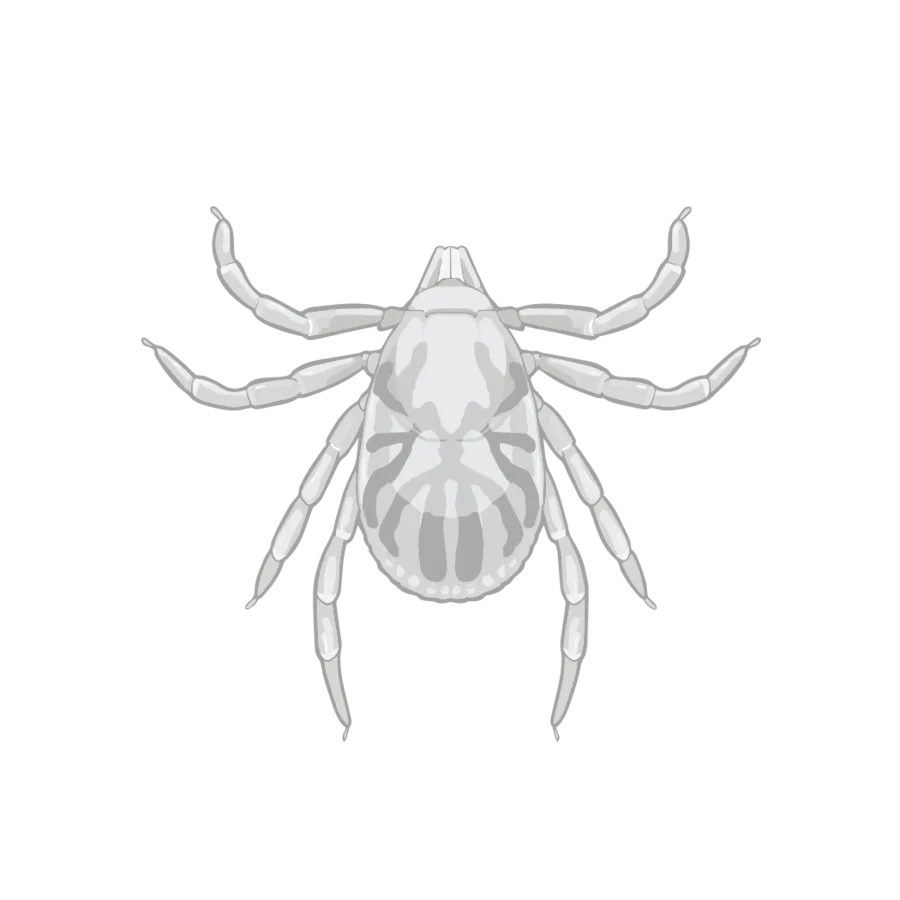
A larger brown tick with mottled cream or gray markings on the shield behind the mouthparts.
American dog tick photos by life stage
Compare more than color alone. Sex, life stage, feeding, angle, and lighting can change what the markings look like.
American dog tick size
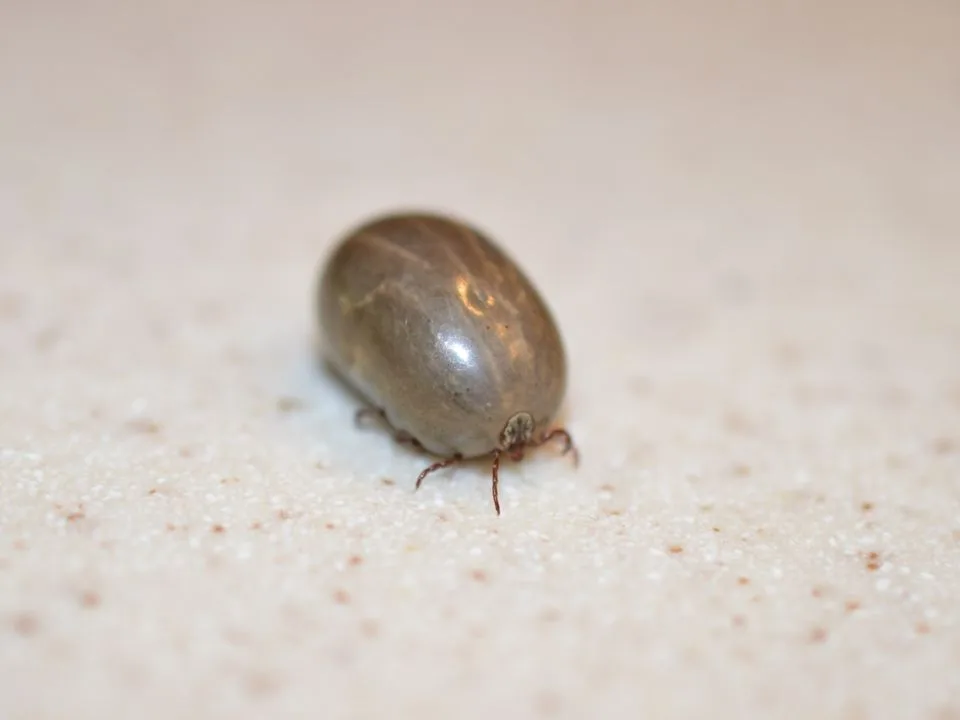
Size is only a supporting clue. Measurements vary, and a fed female can become several times larger than an unfed tick.
| Life stage | Approximate length | Useful clue |
|---|---|---|
| Larva | About 0.6 mm | Six legs and no ornate adult markings. |
| Nymph | About 0.9 mm | Eight legs; pale brown before feeding and darker when engorged. |
| Unfed adult | Roughly 4–5 mm | Brown with cream, gray, or white patterning on the back. |
| Engorged female | Up to about 15 mm | Swollen gray-brown body with the patterned shield still visible near the front. |
Approximate measurements compiled from University of Florida IFAS and Virginia Cooperative Extension identification references.
Male vs. female markings
An adult female has a pale patterned shield over only the front part of her back. An adult male has pale mottling across most of his back. Feeding makes this distinction harder because a female's abdomen expands behind the shield.
Common lookalikes
Blacklegged ticks are smaller and do not have the ornate pale shield. Rocky Mountain wood ticks can look very similar, so location matters. Start with the deer tick vs. dog tick comparison or upload a clear dorsal photo when the markings are uncertain.
Known disease associations
- — Rocky Mountain spotted fever
- — Tularemia
Finding this species does not mean the tick carried a pathogen or that transmission occurred.
Photos need context
Feeding, life stage, image angle, and damage can change how a tick looks. A useful identification weighs several visible traits together and states uncertainty when the photo does not show enough detail.
Found one on a pet? Follow the dog tick removal, check, and encounter-record guide.
References: CDC tick information, University of Florida IFAS, and Virginia Cooperative Extension.